By Mohamed Jalloh
 |  |
EARLY LIFE AND EDUCATION
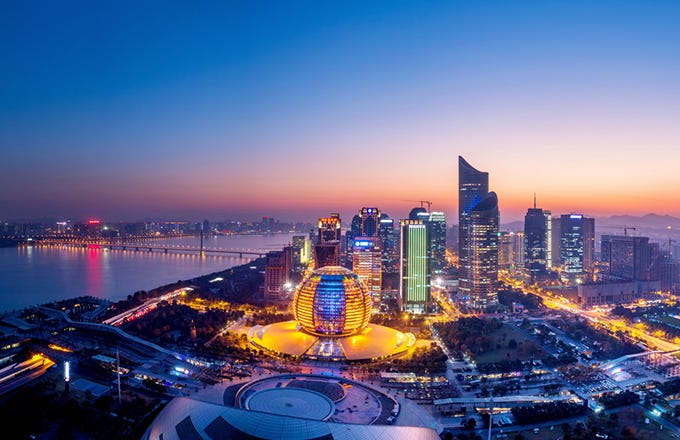
The man known in the West as Jack Ma was born Ma Yun in 1964 in Hangzhou during China’s Cultural Revolution, during which his family was persecuted because of his grandparents, who were members of the Nationalist party that opposed the Communist party. If few things can characterize Jack Ma's background, education and path to success, they are failure, rejection, fighting, resolve, hard work, agility and vision. All throughout Jack Ma's life, from childhood till building a multibillion-dollar global ecommerce technology giant, he has failed many times, been rejected and called crazy, even by his father who warned him about his unique “dangerous” ideas that could have resulted in his imprisonment in an earlier generation.
Jack Ma has learned more from his and others' failures than through the traditional channels of education. Ma, a man of incredible resolve, has learned to fail better and fail forward. As he declared in an interview with Charlie Rose in Davos, "I failed a key primary school test 2 times, I failed the middle school test 3 times, I failed the college entrance exam 2 times and when I graduated, I was rejected for most jobs I applied for out of college. (Ma was the only one out of 5 applicants to the police force to be rejected and the only one of 24 applicants to be a KFC manager to be rejected. "I applied for Harvard ten times, got rejected ten times and I told myself that ‘Someday I should go teach there.’" In the late 1990s after starting Alibaba, Ma tried to get venture capital funding in Silicon Valley for Alibaba and got rejected for running an unprofitable business model. He eventually went back to China without funding.
Unlike many idolized college drop-out successful entrepreneurs such as Mark Zuckerberg, Bill Gates or Steve Jobs, Jack Ma earned his MBA from Cheung Kong University while already building Alibaba in the early 2000s. Though critical of traditional teaching practices, especially at business schools, Ma is fond of academics. He was a university English teacher himself, and he talks about teaching again someday in the future.
Like many brilliant innovative minds, both past and present, Ma struggled academically, especially throughout his early years in primary and secondary schools, where he failed repeatedly. However, he excelled in the things that he was passionate about, for example, teaching himself English. During these formative years, Ma thought that, as long as he kept his resolve and worked to achieve his objectives, he had a chance to succeed. Ma said, "If you never tried, how do you know there's no chance?" Ma successfully failed forward academically into Hangzhou Teacher's college and thereafter, in his career and business.
Like many brilliant innovative minds, both past and present, Ma struggled academically, especially throughout his early years in primary and secondary schools, where he failed repeatedly. However, he excelled in the things that he was passionate about, for example, teaching himself English. During these formative years, Ma thought that, as long as he kept his resolve and worked to achieve his objectives, he had a chance to succeed. Ma said, "If you never tried, how do you know there's no chance?" Ma successfully failed forward academically into Hangzhou Teacher's college and thereafter, in his career and business.
When one listens objectively to Ma's speeches about his early, formative years, one can observe that Ma learned most by experimenting, observing and questioning the status quo. As an adolescent, he taught himself English and polished it by becoming an unofficial tour guide to foreign tourists. Through those tourists, pen pal relationships he cultivated with some of his tourist clients and his interaction with some relatives in Australia, Ma learned much about the outside world (especially the Western world). More importantly, he learned to question (not necessarily disbelieve) everything he thought or was told before, a practice he applies to this day.
That ability to question and reexamine issues helps him to look at situations from various angles and see opportunities where most see only problems. For example, when most people feared conducting e-commerce in China due to an unreliable and untrustworthy payment system, Ma got Alibaba to build Alipay without the Chinese banking authorities approval at the risk of his personal freedom. Now Alipay facilitates more business globally than PayPal, as measured in U.S. dollars.
Ma could be said to have graduated from both formal and informal education systems. If informal education is thought of as "the School of Hard-Knocks," Ma has earned a doctoral degree with honors in addition to his MBA from Cheung Kong University. Ma is also heavily influenced by martial art teachings, especially Thai-Chi, which he claims helps him to find balance that he applies to both his personal and business life.